Showing posts with label Creature Features. Show all posts

6 March 2013

Antlions: the truth behind Star Wars

Anyone who has ever seen The Return of the Jedi will be familiar with Luke Skywalker’s and Han Solo’s plight as Jabba the Hutt attempts to feed them to the sarlacc, which lurks in the bottom of the Great Pit of Carkoon. What might surprise you though is this isn’t far from the truth and many insects live in very real danger of coming face-to-face with such a creature, which is known as the antlion. 

As their comparison to the fictitious sarlacc suggests, antlions are ambush predators and are fairly common worldwide. In fact, they are found in almost every dry, arid environment and around 2, 000 species have been described so far that belong to the family Myrmeleontidae. Like many insects, antlions have a complex life cycle and pass through a larval form before they finally mature into adults. Due to this, the term ‘antlion’ is usually reserved to the larval form of the insect (which are sometimes called doodlebugs due to the spiralling trails they leave in sand while looking for a suitable place to build their trap), as an quick way to identify the form of the insect. 

Just like the sarlacc is, antlions are terrors and are capable of eating almost any arthropod that is unlucky enough to fall into one of their traps. Thus, their diet consists of a variety of insects that ranges from ants (obviously) and termites to small spiders! How their prey is caught however, depends on the exact species of antlion and their surrounding habitat, meaning that they could be lurking in foliage, hiding in the cracks in rocks and bark or be waiting in especially dug pits. 


Unusually among insects, antlions lack an anus and store all of their waste inside their bodies until they undergo metamorphosis (where it is discarded with the remnants of their cocoon).

It is the species that dig pitfall traps in sand that are particularly renowned however, and much research has been carried out into their trap-building behaviour. Typically, antlion pitfall traps are about 3 inches wide, 2 inches deep and are dug in finely grained, loosely packed sand. This criteria allows an antlion to create a steep, treacherous pitfall that their prey struggle to escape from once they've fallen into it as the walls crumble beneath their feet. To make their escape even harder, the antlion will then toss sand at the struggling insect to create a mini ‘landslide’ that helps to drag the struggling insect further into the hole. 

And once the insect has reached the bottom of the pit, it's all but game over and the antlion grabs it in its powerful mandibles, injecting deadly toxins and acids into its prey via several long spines that project from its hollow jaws. The antlion, which is firmly anchored in its trap by forward-facing bristles on its legs and body (that prevent it being dislodged and pulled from the pit), then holds its prey still until it has died and sucks the fluid ‘mush’ from the insect - feeding in same grotesque manner as spiders do. And, once the antlion is full, it throws the withered husk of its prey from its trap in the same way as it tosses sand and sets about repairing its walls. 

Antlions can remain in this larval form for up to 3 years, depending of course on the exact species and the amount of prey that is available, before they encase themselves in a cocoon of silk underground. Here, antlions undergo a remarkable process called metamorphosis where they change into their large, adult form over the period of about a month. Once their transformation has finished, the insects emerge from the ground, wait for their bodies to dry out and harden, and take to the air in search of mates.


Depending on the species, antlion damselflies can vary from being fairly small with 2cm wingspans to being much larger with wingspans of 15cm! Adults are much bigger than the larval form and show the greatest difference in size in any holometabolous insect (one that completely changes form via metamorphosis).

Adult antlions are sometimes are sometimes called antlion damselflies (despite having no relation to the damselfly family), and, depending on the species, vary between remaining as fierce predators or switch their diet to eat pollen and nectar. As their nickname suggests, the adult form look similar to damselflies although they can easily be identified by their extremely long, clubbed antennae and very narrow wings. 

Oddly, antlion damselflies are rarely seen in nature because they are usually active in the late evening and are poor flyers so (rather ironically), are very vulnerable to predators. They can be a real nuisance in desert areas however, where they are more abundant, as they tend to swarm and can deliver a mildly painful bite to any humans that they land on!

So, you might agree then that antlions are interesting insects in their own rights - being such fierce and efficient predators - but, considering they are the inspiration behind one of Star Wars' most famous aliens, they become even cooler and are definitely well worth knowing about!


27 January 2013

Beneath the trapdoor danger lurks...

Wherever you go, you are bound to find spiders. They are an ancient class of predator and have learnt to use poisons, brute force and complex webs of silk to terrorise and instil fear into animals on every continent of the world except Antarctica. 

Typically, an easy way to tell the rough age of a species of spider is by looking at the complexity of the web it spins and the general rule is that the more elaborate the web, the younger the species of spider. This makes sense really as it would be expected for more complex structures, such as web scaffolding patterns, to take longer to evolve! Thus, the infamous tarantulas, which use silk only to line their burrows for warmth, are among of the oldest species of spider on the planet. 

Trapdoor spiders are another ancient lineage of arachnid, which is suggested by the simple manner in which they use silk. They use silk for the same purpose as many more ‘modern’ spiders since they rely on it to convey vibrations to them to show that prey is nearby, but do not spin it into complex webs. 

There are more than 500 different species of trapdoor spider that have been described so far, which can be found in tropical regions all across Earth. Despite being large and looking fairly intimidating, trapdoor spiders are rarely aggressive and are not dangerous to humans.

So instead of building silk nets like many newer species, trapdoor spiders dig a deep burrow in the soil (some species make a long tube of silk instead) and spin trip-lines that radiate out from the tunnel’s entrance. The spider then lurks near the mouth of its burrow, touching its trip-lines, and waits for an insect to knock one of the threads. When this happens, the spider feels the vibration and lunges out to grab, bite and poison its prey. 


Many species of trapdoor spider take this ambush tactic a step further and actually build a covering over the hole of their tunnel. This ‘trapdoor’ is what gives the family of spiders its name and is cleverly made from materials surrounding the burrow, such as soil, vegetation and silk, so it is camouflaged perfectly with the ground! 

Species that make a trapdoor always hinge their covering at one end with thick webbing and hold it down tightly using special claws on the ends of their feet. When its trip-lines are activated, the spider flips open its trapdoor, explodes out of its burrow and drags the hapless insect back inside for its dinner! And because trapdoors are typically very large spiders, almost all insects are on their menu – with meals commonly including cockroaches, crickets, grasshoppers, beetles, moths and other spiders. 

As would be expected, trapdoor spiders invest such a huge amount of time and energy in digging their burrows that they are a very shy and reclusive species. In fact, trapdoors rarely leave their burrows at all and female spiders typically spend their full 20 year lifespan in one burrow! It is usually only males that venture out from their burrows and even then, only once they have matured sexually and are seeking a mate. Like all spiders, male trapdoors mature near to the end of their lives (which are much shorter than those of females) so are inclined to take huge risks in finding a mate before they die. 

Once a male spider has mated with a viable female, the male dies (often to be eaten by the female) and the female remains in her burrow to feed her spiderlings when they hatch. Shortly after hatching, the spiderlings venture out of their mother’s burrow to dig their own home using their front legs and specialised barbs on their fangs called rastellum that help them to move soil.


16 December 2012

The icefish: life without respiratory pigments

Wherever you look for life on Earth, you find it. From free-floating bacteria in the upper atmosphere to tiny organisms that make their home deep within the solid crust of its surface. Animals have been found thriving in deserts hot enough to cook them alive and, similarly, have been recorded living abundantly in environments that are cold enough to freeze their bodies solid!

Living in such hostile conditions places huge strains on the organisms that live there, which, as a necessity, have had to evolve specialised physiological adaptations if they are to survive for long enough to reproduce and pass on their genes. There are many examples of extreme and unique adaptations for this purpose, with those of the Antarctic icefish being among the most bizarre.

Icefish are found throughout the cold waters that surround Antarctica and South America, belonging to the Channichthyidae family - a small group of fish that have no respiratory pigments in their blood. 

Rather uniquely among species of animals, Antarctic icefish do not rely on respiratory pigments to carry oxygen in their blood and lack them altogether! Such respiratory pigments were once believed to be essential for multicellular life to exist since they chaperone oxygen so that it can be removed from the air and absorbed by the blood, where it is at a much higher concentration than in the surrounding atmosphere. This is an important 'law' that life must overcome if it is to grow bigger than a single-celled organism because molecules naturally diffuse from an area of high concentration to one of a low concentration and not the other way around! So, simply put, without respiratory pigments the oxygen content of blood would be too low to fuel life as we know it!

Thus, the vast majority of multi-celled organisms have blood that is packed with respiratory pigments. These pigments are usually constructed from 1 of 2 key metals, with which one being used depending on an organism's evolutionary history and can be used to synthesise a number of different pigments:

  • Iron, which is the most common basis of respiratory pigments, can be used to produce:
    • Haemoglobin, which is found in humans and turns red when oxgenated.
    • Hemethryins, which are found in terrestrial worms and brachiopods, and turn violet when oxygenated.
    • Chlorocruorin, which is found in aquatic worms and turns green when oxygenated.
  • Copper, which is used to make hemocyanins. Hemocyanins are blue when oxygenated and are usually found in families of molluscs and arthropods.

The fact that icefish lack such respiratory pigments is puzzling at first glance, but actually makes sense when it is considered carefully since it provides the fish with a huge advantage in their ability to survive in the harsh cold of Antarctica. Basically this advantage stems from the fact that the colder water is, the more oxygen can dissolve in it. Thus, the frigid Antarctic waters carry much more oxygen than warmer waters do so icefish breathe in more oxygen with each 'breath'. This, coupled with the fact that they have twice as much blood fluid in their body than another species of fish their size, means that they can still provide their muscles with enough oxygen to work effectively.

But why is this advantageous to their survival? Well, the fact that icefish can supply enough oxygen to their muscles in order to survive without respiratory pigments means that they do not have to make any; saving them huge amounts of energy each year that can be used for more useful tasks instead, such as feeding, reproducing and evading predators!

Furthermore having no respiratory pigments in their blood decreases its overall viscosity by about 25%, which means that their heart has to work far less hard to pump blood around their body than it otherwise would have. In addition to placing less strain on the organ so they can live for much longer before it gives out, having thinner blood also reduces their energy expenditure and allows them to move 4 times more blood which each beat than a typical fish their size - saving even more energy!

Thus, the icefish has evolved to possess one of nature's most bizarre and unprecedented adaptations that allows it to thrive in one of the most extreme environments on Earth! Without this adaptation, or another that gave it a similar advantage, the strange fish would have undoubtedly died out long ago, being unable to to survive and reproduce in the freezing waters of the Antarctic...

4 November 2012

Lyes of attraction

Except for the occasional white lie here and there, most of us try to avoid deceiving our families and friends and dislike being lied to by others. Lying is not considered a positive trait and people who tell fibs too often are mistrusted and usually find that they have fewer friends than they thought they did.

As you undoubtedly know, lying is a particularly huge issue in relationships and has probably broken up more couples over human history than we can record. This comes as no surprise and dumped liars rarely receive sympathy as we all know that it's their own fault. What is odd though, is that not all animals share our views on lying and for one species in particular, the Australian lyrebird, the better an individual can lie the more popular they are!

Lyrebirds are among the most esteemed of Australia's native animals and are famous for their impressive prowess of 'lying'.  There are just 2 species of lyrebird: the superb lyrebird (Menura novaehollandiae) that is pictured above and Albert's lyrebird (Menura alberti), which belong to their own unique genus.

In fact, being able to lie well is much more important than simply for making an individual popular - it is an essential skill that a male bird must master if he wants to attract a mate! Lyrebirds, you see, have one of the most sophisticated courtship rituals in nature, which involves splaying their luxurious tail feathers (in much the same way as a peacock), and mimicking as many noises as they possibly can. These sounds, which can be imitations of anything, such as other bird calls, car alarms and even chainsaws felling trees, are then incorporated into an elaborate song that the male may sing for up to 4 hours a day during breeding season (June to August)!

It appears that the more complex the courtship song, the more successful the male bird is in attracting a mate. Once a male lyrebird has successfully mated with a female bird, she lays a single egg in a nest that she's made on the ground, and incubates it as the sole parent for nearly 2 months.

Analysis of the songs made by courting lyrebirds has found that they are usually split into 7 clearly distinct sections, where about 80% of the entire song is made from mimicry. Male and female lyrebirds both become sexually mature before they are 10 years old, although it should be noted that females mature a few years earlier than males do. Due to this, male birds don't actually start singing properly until they are almost a decade old. Before then, males are believed to practise 'lying' where they learn to modulate their highly developed voice box so that it can mimic almost any sound they hear.

Thus, the ability to lie and produce a whole host of sounds that are not normally made by lyrebirds is a huge part of their culture and has made the passerine (song) birds one of the most noted birds in Australia, and maybe even in the world.


16 July 2012

The curious case of the Honeyguide

According to rock paintings scattered throughout Africa, humans have been collecting honey for at least 20, 000 years. This is not surprising really seeing as it is a readily available and palatable food that has a sweet taste and high energy output. What is surprising however, is that many African tribes (which still collect honey using traditional techniques), frequently work in partnership with a bird that leads them to any bee colonies that it has discovered in trees, rock crevasses and disused termite mounds! There are anecdotal records of this partnership extending as far back as the 17th Century - a partnership that has been of great interest to many biologists.

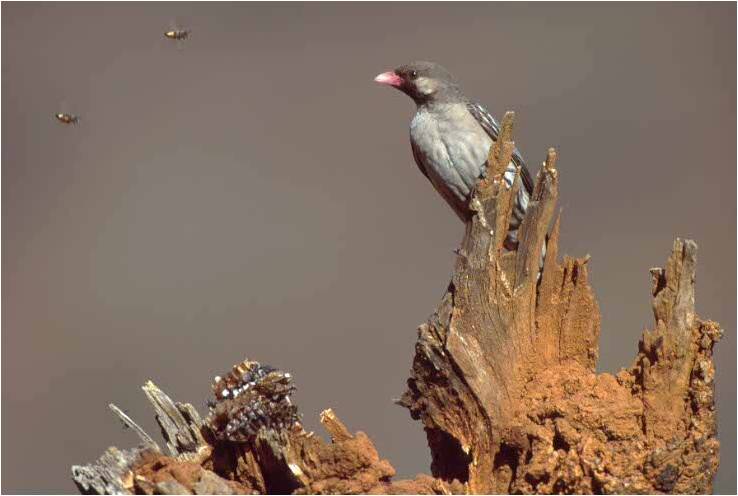
The Greater Honeyguide, Indicator indicator, is related to the family of woodpeckers and is native to sub-Saharan Africa.

This remarkable partnership between the Greater Honeyguide and humans is fairly complex and requires the active participation of both parties in order for it to work effectively. To begin it, African honey-gatherers first draw the attention of the bird when they set out on an expedition by using a distinctive whistle that can be heard from more than a 1 km away. This call, known as the 'Fuulido' among the Boran tribes of Kenya, is made by blowing air into closed fists, modified shells or hollow nuts and more than doubles their chances of encountering the bird. Once a Honeyguide has located humans that are interested in foraging for honey, it becomes excited and flits rapidly between perches that are close to the party while emitting a double-noted and persistent call. African honey-gatherers claim that this call signals that the bird knows of a nearby bee colony, which it will lead them to. Thereafter this behaviour, the Honeyguide flies away in a straight line for up to few minutes before returning. Once it has returned to the foraging party it sits on a conspicuous perch until the honey-gatherers approach it, at which point it flies off again in the same direction (while calling). In this manner, it leads the humans to the site of the colony with each flight getting shorter and each perch getting lower as the distance to the hive decreases. Once the Honeyguide has reached the site of the hive, it circles it and emits a lower 'indication call' that is softer, with a greater gap between notes to signal their arrival.

Researchers have found that this communication system is extremely successful and have calculated that by following the bird, African honey-gatherers can reduce their foraging times by 64% (Isack & Reyer, 1989)! Despite its obvious success and benefits to humans however, many scientists were once baffled as to why the system evolved in the first place. Mainly, because it would have been an evolutionary nightmare: with both counterparts to the system having to learn how to communicate with the other and what parts to play simultaneously... It is plausible however when you consider the fact that humans and Honeyguides have coexisted in Africa for millions of years, providing a long 'window' that this could have taken place in. Furthermore, the evolution of such a system makes sense logically. Humans benefit from following the Honeyguide since the bird leads them to bee colonies and saves them many hours that they could have spent fruitlessly searching for. Once at the nests, humans can break them open using tools and smoke (an old bee-keepers trick that makes bees very docile, effectively sending them to sleep) to extract the honey and thus, get a food reward. The Honeyguide benefits from leading humans to any nests that it has found since humans can break the nests much more easily than they can. Thus, they can get their own food reward (wax and larvae) without the risk of being stung. Thus, both parties directly benefit from participating in the arrangement and it should logically, be under positive selection pressure.

Many biologists argue that the communication system between humans and the Honeyguide actually evolved between the bird and the Honey Badger, Mellivora capensis, and that humans merely 'hijacked' their way into it. This is highly doubtful however, due to two main reasons. Firstly, Honeyguides are diurnal (active during the day) and Honey Badgers are nocturnal (active during the night) so the animals would rarely meet under natural circumstances and definitely not enough to allow such a sophisticated communication system to have evolved. Secondly, because no-one has ever seen a Honeyguide lead a Honey Badger to a bee colony nor are there any historical anecdotes of this occurring.

Interspecific communication systems such as this are very rare in nature and have only seldom evolved. This is mainly due to the fact that different species are usually in direct competition with each other for resources so would normally selfishly exploit such a system for their own ends and due to the difficulties in the genetics and learning that underlies such behaviours (which were mentioned earlier). Thus, the relationship between humans and the Greater Honeyguide is a remarkable feat of communicative engineering and is a superb example of the ingenuity of Nature.


Reference

Isack H. A. & Reyer H. U. (1989). Honeyguides and Honey Gathers: Interspecific Communication in a Symbiotic Relationship. Science 243, 1343-1346.

27 June 2012

Watching from the waters

The Nile crocodile, Crocodylus niloticus, is one of the most feared animals in the world and is undisputedly the most dangerous species of crocodilian to humans - being estimated to kill around 200 people each year. This is mainly due to its close proximity to our settlements and its indiscriminate diet - with it hunting anything that moves! Growing as long as 16 feet (5 metres) and weighing up to 225kg (500lb), the Nile crocodile can be found through central and south-east Africa and on the western shores of Madagascar. 

This is believed to be one of the largest specimens of Nile crocodile ever caught! Its huge size makes it no wonder why many Ancient Egyptians incorporated the beast into their belief system and worshipped Sobek, the crocodile god that lived in Crocodilopolis - a great city of crocodiles!

Probably one of the main reasons that the crocodile is such a proficient predator and is so lethal to humans is because it is a silent ambush predator - its flat body allows it to remain completely submerged, even in the shallow waters by river banks; and it has slightly raised nostrils and eyes that can be poked above the surface while keeping everything else hidden underwater, allowing it to see and breath virtually unnoticed. This allows the crocodile to get within yards of its prey (including humans), completely unnoticed and once it is ready, it lunges out of the water. Once the crocodile has lunged it is normally too late for its victim due to the speed of the attack and the animal is then crushed in the crocodile's vice-like bite and dragged into the water. After it has bitten an animal, Nile crocodiles (as with most crocodilians), have an overwhelming instinct to role - this is commonly known as 'death rolling' and, by spinning like a corkscrew, the crocodiles tear huge chunks of flesh out of their prey. This helps to compensate for their ineffective teeth, which are unusually blunt for a predator.

http://www.corbisimages.com/stock-photo/rights-managed/FL004379/nile-crocodile-eats-gazelle-kenya
A Nile crocodile that has caught a gazelle. Nile crocodiles can eat up to half their body weight at a time and their bite force has been measured to be as high as 5, 000 lbf (22N), which is like being hit by a very fast-moving truck! Like most crocodiles, N. niloticus has a primary and secondary bite where an individual bites its prey once and then re-bites it without relaxing their first bite, helping to drive its blunt teeth even further into the flesh of the animal.

Ambushing their prey in this manner means that they can remain motionless in the water for very long periods of time and so, can conserve enormous amounts of energy. Crocodilians can also reduce their energy expenditure even further by slowing down their breathing and reducing their metabolism using a sophisticated cardiac shunting system that diverts blood away from their heart. Although cardiac shunting mechanisms are found in many species of reptile none have one as advanced as crocodiles. This, along with the fact that they have the most advance heart physiology in the world, has led many scientists to believe that crocodiles were once endothermic (warm blooded) like mammals and birds! Such scientists believe that their warm blooded ancestors slowly evolved back into being ectotherms (cold blooded) when they began to ambush their prey from water since a cold blooded body-plan would be much more beneficial for such a strategy; mainly because it wastes much less energy than trying to maintain a body temperature that is hotter than the surrounding water - just think about how cold you get if you spend too long in a cool bath or pool!

Thus, crocodiles can remain even in fairly cool water for long periods of time and wait for a potential meal to come to them! This is usually when an animal ventures too close to the waters edge for a drink... Nile crocodiles don't even have to use their muscles to hold their head up so can save even more energy while they wait! Their lungs act as ballast tanks and when they are inflated with air, actually push the crocodiles snout and eyes up above the water level! In fact, crocodiles can slow down their energy expenditure so much that they can hold their breath underwater for up to 2 hours when they inactive; often, lying in little 'dens' that they've dug out of the riverbed with their arms.

Certain species of bird, such as the spur-winged plover (Vanelus spinosus), have been seen picking scraps of meat from between crocodile teeth. It is not known for certain whether the birds are merely 'running the gauntlet' to obtain food at great personal risk or whether crocodiles are allowing them to this; forming a mutualistic relationship where the birds are fed while keeping the crocodile's mouth and teeth clean.

Although Nile crocodiles often hunt via ambushing their prey, they can also hunt with a much more proactive and energetic approach - chasing after fish and eating them underwater. It is believed that Nile crocodiles prefer to eat larger terrestrial game that they hunt with surprise attacks preferentially and switch to smaller fish when they aren't available or during then night when their mammalian prey is less active. Nile crocodiles are thought to prefer to ambush mammals for two main reasons: firstly, since it is less energetically expensive as mentioned above; and secondly, because crocodiles are far-sighted underwater due to the closure of their protective nictitating, or 'third', eyelids. Closing their third eyelid helps to protect their eye from underwater debris but also bends the light that passes through it so that the lenses in their eye can't refract the light enough to focus on close-up objects. Obviously, this will severely reduce their ability to hunt underwater and hunting in such a manner would probably be impossible if they didn't have many sensory papillae around edge of their lower jaw. These papillae act a bit like whiskers in dogs and cats and are able to detect even very minute vibrations in the water, allowing the crocs to sense fish that are close to their mouth! Crocodiles use much more energy when hunting fish in such a manner and as a result, can only hold their breath underwater for about 15 minutes since their muscles require more oxygen.

Their ruthless ability to surprise their prey and the fact that they eat humans has undoubtedly earned the Nile crocodile a fearsome reputation as a heartless monster. Oddly however, this isn't true and Nile crocodiles are one of the few crocodilians that care for their young - with mothers watching over their nests from when they lay their eggs to when they hatch! Most crocodilians abandon their nests as soon as they have lain their eggs and leave their offspring to fend for themselves. Furthermore, many crocodilians are cannibalistic and will eat juvenile crocodiles so that they may actually kill their own young unknowingly...

The gender of crocodiles is determined by the temperature that the eggs are at during their incubation, with temperatures of 32 - 33C producing males. Anything warmer or cooler than this narrow temperature range produces females, which is of great concern to conservationist biologists since global warming may result in more females being born and less males! The small size of the baby crocodiles makes them very vulnerable to predation early in life, but as they grow bigger and, if all goes well, the crocodiles can live for up to 100 years!

The Nile crocodile then, is a brutal and ruthless predator that preferentially hunts by ambushing unsuspecting animals from water. It accomplishes this using a range of physiological and behavioural adaptations and techniques which allow them to get within yards of their prey, gliding through the water causing barely a ripple... Despite their danger to man and the polluting effects that our lifestyle has on the waters of their habitats, the Nile crocodile is thriving and is classified as being of 'Least Concern' by the IUCN. This is not surprising really, since crocodilians are ancient animals that even trod the world with the dinosaurs! Their famed resilience allowed them to survive through the catastrophe that killed off the once mighty dinosaurs; and maybe, will even mean that they will survive for long after man has disappeared...

29 April 2012

The amazing acid-proof ant

Most terrestrial insects actively avoid liquids, particularly water, because they are too small to escape from its surface if they fall in, owing to the strong hold that the liquids surface tension holds over them. Even larger insects are no different and dislike water, even though some of the bigger species may be able to paddle around to some degree and eventually escape (if they are not eaten by a bird or a fish first).

The diver ant, Camponotus schmitzi, however is a species of carpenter ant that goes against the insect social norm and actually depends on water to survive. Well, depends on acid that is; not water... The fearless ant lives in an exclusive mutualistic relationship with Nepenthes bicalcarata, a species of  carnivorous pitcher plant that lives in Borneo, where it actually dives into the plants digestive juices in order to scavenge for its prey!

A small group of diver ants waiting underneath the lip of N. bicalarata until a insect drops into the acid pool at its base. The ants will then 'liberate' the plant of its meal, eating it themselves. Although this action robs the plant of its meal initially, the ants mainly scavenge large insects and throw back what they don't eat. This also helps to remove debris from the acid pool, keeping it fresher and therefore more attractive to potential prey animals; meaning the ants also benefit the pitcher plant.

If you've never heard of pitcher plants before then you may be confused as to why they have a pool of acid in their base, but it's actually fairly simple - pitcher plants, like the more famous Venus Fly Trap, are carnivores that live by feeding off insects that they have lured into their trap. Whereas species of Venus Fly Trap clamp insects that have landed on their surface and then actively secrete acid to digest them, pitcher plants use a 'pitfall trap' mechanism. This involves a small hole in their top that their prey must climb into to reach the attractive-smelling puddle of liquid in their base. However, this liquid is actually a mixture of a powerful acid and other digestive juices and once the prey species has crawled inside, it is prevented from escaping by tough downward-pointing spines. Unfortunately, the hapless animal then faces a slow and grisly death where it is digested alive.

Nepenthes sumatrana, a species of pitcher plant that can be found throughout the Phillippines. Its bright colouration and sweet smell help to attract its prey. Some of the larger species of pitcher plant, like those found in the Amazon Rainforest, can even attract and eat mice or frogs as prey!

The observation of diver ants has found that they spend most of their time hidden under the lip of N. bicalarata and run down into the base of the plant when an insect falls into its deadly pool of acid and digestive juices. Amazingly, the ants then dive head-first into the acid and work together to pull out the now dead arthropod and begin to eat it in safety on the shore of the pool. Therefore, the ants still get a meat meal but do not have the same risk of injury that most predators face while killing their prey.

Or do they? This strange hunting method seems to have a major and very deadly risk - obviously, the pitcher plants acid should also kill the ants! Scientists are still baffled by why it doesn't and it is thought that the short exposure time of the ants to the digestive juices allows them to survive, along with some other physiological adaptation that helps provide them with some immunity to the corrosive effects of the acid.

One physiological adaptation that has been identified however, is that the ants have a fluid on their outer cuticle (layer of skin) that makes them less water-repellent and therefore, helps to negate the action of surface tension. This allows the ants to dive underwater and leave the acid pool freely and without this chemical surfactant, they would be trapped on the surface of the acid pool like other insects; eventually dying.

A unit of C. schmitzi workers dragging a dead insect (either a grasshopper or cricket) from the pitcher plant's deadly digestive juices.

What is also interesting, is that the ants appear to sprint through the acid rather than swim; using the same tripod sequence as when they move on land - they move the first and last legs on their left side along with the middle leg on their right side and then the front and last leg of their right side with the middle of their left. This simple method of swimming suggests that the ants have evolved fairly recently, since the ancient and truly aquatic insects have all developed much more complex patterns of swimming than this.

Thus, the ingenuity and unique adaptations of diver ants allow them survive in a very hostile organism that by all rights, should kill the ants; turning them into its next meal...

17 April 2012

"Starry, starry... mole?"

The star-nosed mole, Condylura cristata, is the only member of the genus Condylura and can be found in the wet lowlands of eastern Canada and in the north-eastern states of the USA, typically near to lakes, rivers and streams. The mole is small, with adults being no longer than 20cm and weighing up to a maximum of 55g; and are are instantly identifiable by the tentacle appendages protruding from their nose.

The 22 fleshy tentacles of the star-nosed mole give the species its name and are believed by some scientists to be able to detect the electrical currents emanating from their prey. However, many scientists doubt this as there is little empirical evidence to support this idea.

Unlike other species of mole, which are able to see (albeit with only limited success), star-nosed moles are completely blind. Therefore, they rely exclusively on their nose tentacles in order to detect food, such as worms, insects and crustaceans; and to navigate their way around dark tunnels and other environments. As such, their tentacles are extremely sensitive to touch stimuli and odorants and possess around 25, 000 Eimer's organs per cubic centimetre. This is much higher than in any other species of mole and their tentacles' star-shaped arrangement appears to be an adaptation that allows them to keep soil from entering their nose and to eat very small prey quickly. In fact, they are able to eat prey extremely quickly and are the fastest foragers in the animal world, taking on average of 227 milliseconds to decide whether an item is edible and to consume it. This decision making and response ability is so fast that it is at the limits of the speed of neuronal conduction!

Like other species of mole, the star-nosed mole digs shallow tunnels through the earth when foraging, which helps them to evade their predators, which include owls and hawks and to find many subterranean species of prey, such as worms. Their tunnels can be as long as 270 metres and often exit underwater, with the mole being a surprisingly good swimmer; being able to forage along the beds of rivers, lakes and streams. Interesting, star-nosed moles are also able to smell underwater, which they accomplish by breathing bubbles of air onto objects that they are interested in and then by inhaling these bubbles to carry the scents back through their nose.

Little else is known about the shy species of mole, except that it shows no preference to day, night or twilight activity (which is unusual) and remains active throughout the winter. It is also believe that star-nosed moles live in colonies, as many are frequently seen fairly close together.

5 April 2012

Life's so short so I'm so fast

The Peregrine Falcon is a large, crow-sized bird of prey that is renown for its exceptional in-flight capabilities: the bird is incredibly agile and is the fastest known animal, entering dives of over 200mph whilst hunting! The Peregrine is also the world's most widespread raptor, being found on every ice-free landmass except New Zealand and can flourish in almost every ecosystem other than extreme polar regions, very high mountain ranges and areas of dense vegetation such as in tropical rainforests.

Peregrine Falcons have long, broad wings that end in points, the physics of which allows the bird great manoeuvrability, whilst simultaneously allowing them to reach very high speeds. Their wing-span can be a large as 47 inches and their typical body length is between 13-23 inches. Like many birds of prey, Peregrines show reverse sexual dimorphism and female falcons can be as much as 30 times more massive than males. Peregrines become sexually mature when they are a year old and mate with one partner for their entire life (unless their partner is killed), which is usually around 15 years. The falcons also use the same scrape nest for many years, which unfortunately means that their breeding habits are easily disrupted by anthropogenic activities and if their nest is disturbed, it may be a few years before the pair breeds again.

The Pergrine Falcon, Falco peregrinus. This photo shows the characteristic black 'moustache' of the bird that descends either side of its beak. Their moustache is often used by birdwatchers to quickly identify the bird. The Peregrines upper beak is notches near to its tip, which is an adaptation that allows them to kill prey by severing their spinal column at their neck.

Peregrines predominately eat medium-sized birds such as pigeons and small ducks, but will also occasionally hunt small mammals, reptiles and even insects when their preferred food sources are scarce. Like all falcons, Peregrines specialise in hunting prey whilst it is in-flight, which is where their manoeuvrability becomes useful as well as their extreme speed. When hunting, the falcons will soar to an extreme height until they locate a potential meal. Once they have locked onto a bird they enter a ridiculously steep dive, called a hunting stoop, where they reach incredible speeds of over 200mph. To-date, the fastest recorded dive of a Peregrine is 242mph! Dropping like a missile, the falcon aims to clip one of the wings of its prey, the force of which often kills the unlucky bird outright. Even if the bird does survive the impact however, its fragile wing will be shattered and it will fall to its death. The Peregrine then simply finds where the bird has landed and tucks in...

A Peregrine Falcon entering its hunting stoop. The bird pulls its wings in tightly against its body and will drop at an almost vertical trajectory. Third eyelids, called nictitating eyelids, shut during the dive to protect the bird's eyes and specialised bony tubercles on its nostrils prevent much of the airflow from entering its lungs, preventing them from bursting due to the high-pressure air that is flowing into them.

The speed and spectacular hunting techniques of the Peregrine Falcon has long made the bird of interest to humans and the bird has historically been associated with aggression and martial powers. In Europe for example, Peregrines were the hierarchical bird of prey associated with princes, just below the Gyrfalcon that was used by kings, and princes often used the falcon for hunting and as a display of status. Native American Indians also used the raptor as a symbol of status, along with various other birds of prey, as a representation of celestial power and men of high status were often buried in costumes of such birds.

Man's interest in the Peregrine has also meant that it has been heavily sought after for falconry for more than 3, 000 years and the bird is frequently used in shows and by experienced falconers due to the high speeds of its dives.

A Peregrine Falcon featured on the quarter for the state of Idaho, USA.

Unfortunately, the high human interest in the bird has meant that historically, it was vulnerable to egg poaching. This, along with their persecution by farmers and their susceptibility to many pesticides such as DDT, meant that the numbers of Peregrines decreased dramatically throughout the mid- to late- 20th Century and bird was once classified as an endangered species by the IUCN. However, although the interest of humans in the Peregrine was part of its downfall, it is also the bird's saving grace and the recovery of the bird has been very successful. This is mainly due to the large numbers of the bird that were kept in captivity for their use in falconry, which enabled conservation biologists to mount a large-scale breeding program and the species has responded well, with an increase in Peregrine populations worldwide. There are now an estimated 1, 400 breeding pairs of Peregrine Falcons in the UK and in 1999, the bird was removed from the US Endangered Species List.

17 March 2012

Think Thumbelina, but as a monkey...

Pygmy marmosets are the smallest true monkey in the world, standing at just 5 inches tall (not including the length of their tail) and weighing 4.5 ounces. They inhabit the Amazon Rainforest in South America, climbing to the tops of the trees, as their small size allows them to cling to branches that are too thin to hold the weight most animals. Despite the name however, the monkeys are not true marmosets and its genus, Cebuella, is unique; true marmosets belong to the genera Callithrix or Mico.

The tiny pygmy marmoset monkey, Cebuella pygmaea.

The marmosets prefer to inhabit trees on the banks of rivers, where the upper foliage is usually more easily assessable and the open view makes it easier to spot birds of prey, one of their main predators. The monkeys occupy a similar niche to squirrels in Europe, although their diet predominantly consists of tree gums and saps and is occasionally complimented with insects. The monkeys are highly mobile, being able to jump distances of up to 5 metres at a time! This is possible due to their small size, as they exert much more force in their muscles compared to the size of their body than larger animals, like humans, do - the same reason that ants can carry objects much bigger than themselves. This amazing jumping ability allows them to easily traverse great distances, well for them at least, in search of food and is a fantastic defence against predators.

Although pygmy marmosets aren't particularly intelligent for a primate and have an unusually underdeveloped brain, they have a surprisingly developed communication system. Their 'language' consists of clicks and squeaks, many of which are too high pitched for humans to hear and scientists have identified certain calls that have specific meanings, such as that a predator is in the vicinity.

The monkeys are also highly territorial, with males competing with each other to be the dominant, breeding male. Rather than fighting with each other, which many animals do at great physical cost, the monkeys flatten the fur on their head and pull faces at each other, whilst simultaneously grabbing and displaying their genitals. Whereas this may look hilarious to us, for the competing males it is an epic duel and signifies their place in the group's social hierarchy, including whether or not they are allowed to mate.

Fortunately, the monkeys haven't been too badly effected by the mass deforestation of their habitats as of yet; maybe because their small size means that they don't need much space to survive in. Although, this could change very soon - species have a habit of appearing to fine for an extended period of time and then, suddenly plummet in number to become an endangered species in a matter of years. Hopefully though, this will never happen and the comical primate will survive for generations to come.

Notice the pygmy marmosets hands that have claws instead of nails and, since they are New World monkeys, do not have opposable thumbs.

10 March 2012

Hunting in the depths

The sperm whale, Physeter macrocephalus (previously Physeter catodon), is a fearsome hunter and frequently dives to depths as deep as 3km in search of its main source of food - giant squid. Even though 3km doesn't sound like much, it is so deep that we struggle to build submarines that can withstand the extreme pressures even now; making the whales an amazing feat of evolutionary engineering, being one of the few animals that can survive the radical pressure change between the oceans' surface and its depths. Sperms whales can live for more than 70 years and males, which are more than 40% more massive than females, can grow to over 20 metres in length, weighing up to 57, 000kg. They have the largest brain of any animal and are also the largest living toothed species, although only males actually possess teeth, which can weigh up to a kilogram each.

A male sperm whale breaking up out of the ocean. Note its slender lower jaw, which increases the pressure of its bite (making it more powerful) and the thin, conical teeth that fit into alcoves in the whale's upper jaw - helping to trap anything that it bites in its mouth.

Sperm whales are named due to the large and well developed spermaceti organ that forms most of their head, which at times, can make up a third of an individual's total body length. This gives the whales a distinct body shape, making it difficult to confuse them with another species. Unfortunately, this made them easy targets for whalers in the Industrial Revolution, where they were killed for the whale oil that was harvested from the organ itself and from their blubber. Sadly, their population fell dramatically and, as a result, sperm whales are now protected and the species is classified as 'vulnerable' by the ICUN. Even though the organ has largely brought about the downfall the species, it is critical for their survival. This is fairly obvious really, when you think about the organ's large size compared to the whale's body and the energy that it must take in order to produce and maintain it.

A sperm whale, with its box-like spermaceti organ clearly visible. The whale also has a very powerful, muscular body and thick, triangular flukes that allows it to dive to such extreme depths.

The oldest known function of the spermaceti organ is as a buoyancy aid. At the surface, whales reduce the blood flow to the organ by contracting the diameter all of the blood vessels it contains, in a process known as vasoconstriction. This causes the temperature of the organ to fall and the spermaceti wax solidifies, increasing in density. As the organ is in the whales head, it sinks and pulls the whale downwards head-first; thereby, helping it dive and stay submerged. When the whale wants to rise to the surface, usually to breathe (sperm whales can stay submerged for about 90 minutes at a time), the converse it true and the blood vessels dilate (expand), causing the wax to melt and decrease in density. Thus, the whale is pulled upwards head-first, which allows it to ascend more quickly. This could be potentially life-saving for a whale - imagine running out of breath 3km underwater...

Sperm whales live in small social groups, rather unimaginatively called units, which consist of multiple related females, one unrelated male and calves (both male and female - males leave the group once they sexually mature). In this photo, the unit is sleeping, which is identifiable since the whales always sleep in this vertical position; kept afloat by their spermaceti organs.

However, buoyancy aid is only a secondary function of the spermaceti organ, with it being primarily involved in echolocation. Water is an excellent absorber of light, so that 3km down it is completely dark - no sunlight penetrates to such depths. Interestingly, even if light did reach such depths, sperm whales would be unable to see as they shut their eyes very tightly to protect them against the pressure and cannot open them. Therefore sperm whales are completely blind at these depths, which isn't ideal for a predator. Echolocation, also seen in bats, is an ingenuous adaptation that allows the whales to form an image of their surroundings by generating a series of clicks using the phonic lips at the front of their nose. These clicks then pass into Junk Bodies in the spermaceti organ and are forced out into the water through the Junk's lens-like structure. The whales can then process these clicks as they are reflected back, bouncing off the objects in the water. This allows them to form a 'mental image' of their surroundings, which may be part of the reason why they have such large brains - forming the images requires a large amount of neural processing.

The spermaceti organ also has a third and much more sinister function. The broad-beam clicks that it uses to generate an image of its surroundings can be focused into a much narrower, more intense beam. This beam is used for hunting and is 'fired' at potential prey targets once they have been located. It is so intense that it stuns and completely disorientates its prey, allowing the whale to get close enough to bite it, which normally means game over for the unlucky animal. Further to this, the depths of the ocean are filled with bioluminescent phytoplankton and cyanobacteria, which light up when stressed. Thus, when they are hit by the narrow beam they light up and the sudden surge of flashing light can disorientate the giant squid, which can see at such depths, even more.


A photograph taken by a deep-water submersible that shows a male sperm whale attacking its prey, a giant squid. Giant squid are a formidable killer in their own right, possessing thousands of suckers that each contain razor sharp chitin rings and a great quantity of scars can be seen on the whale, as a result from past encounters.

As said previously, one of the most amazing abilities of sperm whales is their ability to dive down from the relatively low pressure of the surface, to the abyssal depths that are under enormous pressure. So, as you would expect, they have many physiological adaptations that allow them to do this. The main ones are that their entire body, including all of their viscera (internal organs) are designed to be crushed, yet continue to function. Their rib cage is highly flexible and can fold almost flat; their lungs secrete a unique pulmonary surfactant that contains detergents to stop their delicate alveoli sticking together; and their heart virtually stops beating during the dive, which is accomplished by a massive drop in their metabolism. The fact that their metabolism and heart rate slows down so dramatically allows them to hold their breath for much longer than they could have otherwise. However, this still wouldn't allow them to hold their breath for a dive of 90 minutes so, to increase this time, they have an enormous quantity of blood, which therefore, can hold an enormous quantity of oxygen. Sperm whales also have extensive reserves of a pigment in their muscles called myoglobin, which acts as an emergency store of oxygen. Thus, sperm whales are able to dive at great depths for an extended period of time.

Despite still being rare, the population of sperm whales is beginning to rise and it is faring much better than other endangered species of whale. Mainly because its hunting is now banned in almost every country, meaning that commercial whaling of sperm whales has ceased, it has no natural predators and giant squid are not fished by humans, so its food source is not declining. Therefore, it is likely that this truly amazing animal has survived industrial whaling and will grace our oceans for many years to come.