6 August 2012

Sleep: what is it & do we really need it?

In his novel The Wise Man's Fear, Patrick Rothfuss says that "you never really appreciate sleep until you wake up". He makes a good point here, as we often don't want to sleep even though we know that we'll be bad tempered, tired and miserable over the next day as a consequence. This is mainly because we have better, more interesting things to do so spending 8 - 10 hours asleep* seems like a pointless waste of our valuable time. However, as we all know, sleep is essential and shouldn't really be cut back on unless it's completely unavoidable. For example, sleep allows the levels of neurotransmitters in our brains to recover after a hard day's activity, allows us to repair damaged tissue and is even an essential factor for effective weight loss!

In order to fall asleep your core body temperature must drop. Sadly, this means that the traditional British tradition of taking a 'nightcap' of a spirit before bed actually makes it harder to fall asleep as alcohol raises the core body temperature.

As you would expect for such an obviously important biological process then, sleep has been extensively researched for decades. Much of this research has been fairly mundane, revealing fairly obvious facts like our sleep cycle runs as a circadian rhythm (one that repeats itself every 24 hours) and that lack of sleep has negative effects, such as reducing our mental and motor functions; our ability to cope with new and unexpected situations/events; and (usually), causes us to put on weight. Other areas of research however have been much more interesting and have yielded more titillating results.

Research into the sleep cycle itself is one such area, and has found that humans have 5 different stages of sleep. These stages fall into two major categories: Non-Rapid Eye Movement (NREM) sleep, which is sometimes called 'quiet sleep' and Rapid Eye Movement (REM), which is also called 'active' or 'paradoxical sleep'. NREM sleep consists of 4 of the 5 stages of sleep, which are designated as Stage 1, Stage 2, Stage 3 and Stage 4 respectively. REM sleep, which is arguably the most important state, only forms our final and deepest stage. Our bodies cycle through these stages over the period that we are asleep, with each stage being significantly 'deeper' than the one before it. Obviously then, we are much more awake in the earlier stages than in the latter, which is mainly due to differences in the brainwave patterns used by our brains. The earlier stages produce short, fast brainwaves called beta waves, which eventually progress into slower alpha waves. During these early stages, when you're not quite asleep, many people experience intense sensations called hypnagogic hallucinations. These are perfectly normal, and common examples include the sudden sensation of falling and hearing someone calling your name. Many people also experience sudden starts in the early stages, where they wake up with a twitch for no apparent reason. These starts are called myoclonic jerks and are not a cause for concern in most cases.

It is worth noting however that the body does not progress through these stages sequentially and upon falling into sleep, the body enters Stage 1. After this it progresses through to Stage 2, Stage 3 and Stage 4, which makes sense really. However, before entering REM, the body reverts back into Stage 3 and then Stage 2. It is only after reaching Stage 2 for its second time that the brain jumps directly into REM sleep. After the body has finished with REM sleep it returns back to Stage 2, which forms one complete cycle and typically takes 90 minutes. Our bodies typically undergo 4 or 5 of these cycles every night (consecutively) and spend more time in REM and less time in NREM sleep with each cycle. Thus, the body spends only a short amount of time in REM at the beginning of the night, but by the end, can be in it for up to an hour at a time.

The invention of the electroencephalograph in 1924 allowed scientists to see a person's brainwaves in real-time. Thus, it allowed them to study sleep as they never could have before and led to the discovery of the 5 stages of sleep.

Although this sleep cycle seems overly elaborate and pointless (as we're only asleep), it is actually very clever and each stage has its own characteristics and biological functions. Stage 1 for example, can be considered as our gateway into and out of sleep and typically lasts for only 5 - 10 minutes. Stage 1 is characterised by high amplitude theta waves in the brain, which are a very slow type of brainwave and, if a person is woken during this stage, they probably won't even realise they were asleep because their brainwaves are very similar to those displayed when they are awake.

Stage 2 last for up to 20 minutes and can be compared to a 'track changer' on a rail-road system and directs our brainwave patterns back into Stage 1 (so that we wake up), further in NREM sleep or deep into REM. Therefore Stage 2 effectively controls the sleep cycle and is characterised by the appearance of rapid, rhythmic bursts of brain activity called sleep spindles. It is in this stage that our core body temperature and heart rate begins to drop, which lowers our metabolism and energy consumption to allow our breathing to slow.

Stage 3 is a transitional period between light and deep sleeps and is marked the the appearance of delta waves, which effectively prepares our minds for low-intensity dreaming. Stage 4 follows on shortly after the appearance of delta waves, and is the first stage in which we dream. Stage 4 typically lasts for about 20 minutes and is the most likely stage for bed-wetting and sleepwalking to occur in.

Most of our dreaming occurs in REM, which, as mentioned before, is our final and deepest stage of sleep. This also explains why we rarely remember of dreams in REM even though it is here that they are at their most vivid - our brainwaves are so completely different to the patterns our brains use when we are awake, that they are almost completely incompatible with each other! Think of the difference between video cassettes and DVDs, which both show the same media despite doing in completely different ways...

Bizarrely our bodies actually become more active in REM sleep than in NREM, which is why it is sometimes called 'paradoxical sleep'. This can be seen just by looking at someone in REM as their eyes flick around in their sockets very rapidly, which gives the stage its name. To prevent people thrashing around in their beds and acting out their dreams our bodies employ a clever trick: they secrete a chemical that paralyses all of our voluntary, skeletal muscle so that we are unable to move!

Alarm clocks that wake you up using light are much better since they cause your brain to cycle down through its sleep cycle so that you wake up directly from Stage 1. This is the 'natural' way to wake up and leaves you feeling alert and fresh, as if you'd woken up by yourself. Sound alarm clocks can wake you abruptly from any stage, which is a problem when you are woken from the deeper states. This is because the deeper states have brainwave patterns that differ greatly to waking patterns, so that you feel groggy and disorientated for a time until they have changed.

An addition to understanding what goes on when we sleep, much research has also begun to unravel why we need to sleep in the first place, finding it to be essential for our long-term health. There are three main theories of why we sleep that do not have antagonistic values with each other, so may all be correct to varying degrees. The first, and probably most accepted theory, is called the 'Repair and Restoration Hypothesis'. This theory suggests that our bodies use sleep to heal and repair any damaged tissues and restore all of the physiological processes that allow our bodies and minds to function efficiently. Studies into this theory have found that people spend more time sleeping after periods of strenuous mental or physical activity, which would be expected really if our bodies were indeed healing during sleep. Research has found that the body greatly increases the rate of cell division and protein synthesis during NREM sleep, which is essential for growth (in a child) and for repairing physical trauma. Evidence also suggests that the high brain activity seen in REM sleep allows the body to replenish and 'restock' its levels and reserves of neurotransmitters so that the brain can function more easily and efficiently the next day.

The second major theory of sleep suggests that it is a mechanism for the brain to make sense of and store all of the information and events that it has been exposed to throughout the day into the brain's long-term memory. This is called the 'Information Consolidation Theory of Sleep' and research has provided much evidence that supports it.

Many students, particularly when at university, pull 'all-nighters' where they spend as much of the night as they can revising for their exams. This is actually detrimental to their learning efforts and makes them much less likely to remember what they've read. Having an early night greatly increases the likelihood of the information they've revised earlier being stored and makes it easier for them to think the following day.

The third and final of the major theories is called the 'Evolutionary (or Adaptive) Theory of Sleep' and suggests that sleep is used as a mechanism for conserving energy (due to decreased physical activity) during periods in which it would be dangerous for that animal to be active in, such as at night in humans due to our relatively poor ability to navigate our environment in the dark. The main support for this theory comes from the fact that animals with few or no natural predators, such as lions, sleep for much longer periods of time than those with many predators, such as mice, which only sleep for a few hours a day.

So, it is obvious that sleep is an essential and a very important process for our health. It allows us to conserve energy, repair damaged tissue, helps us to form long-lasting memories and helps to us prepare for the days to come. Skipping sleep in favour of other, more interesting activities, really isn't a good idea and you should ensure that you are getting the amount of sleep that your individual body requires each night. All of the sleep-deprivation studies to my knowledge associate a lack of sleep with direct, negative side-effects that can easily be avoided.

* on average, depending on your age.

23 July 2012

Do our hair and nails really grow after we are dead?

Many people will tell you that once you have died your hair and nails will continue to grow for days afterwards, with the exact time period varying depending on the individual telling the story. This popular piece of 'common fact' is undeniably interesting, but sadly, is completely incorrect; being nothing more than a frequently repeated tale of urban mythology. To put it simply, when you are dead your metabolism has completely ceased and among many things, this means that your body cannot create any new material like hair and nail tissue.

This is an electron micrograph of a human hair follicle. Hair is formed from rapidly dividing skin cells that are killed almost as soon as they are formed and filled in with a insoluble biological 'wax' and colouring pigments. They are then wrapped up a bundle of keratin fibres to form a helical strand of hair. The strand then grows from its bottom as new cells push the older ones upwards. Nails grow in much the same way, except they are laid down in sheets rather than as a helix.

Yet despite this, a deceased person's hair and nails do appear to grow for nearly a week after they have died... Although this may appear confusing at first glance, the answer to the conundrum is in fact very mundane: the human body is predominantly composed of water and over time, a cadaver dehydrates. As the cadaver looses water into the surrounding environment, their skin contracts and exposes already grown (but previously hidden) hair and nail tissue. It is surprising how much of these materials your body has tucked away beneath your skin and, by contracting, gives the impression that they are eerily growing post-death on their own accord...

Dehydrating skin also explains another common feature of corpses, whereupon they appear to smile. As the skin around their mouth becomes tighter it contracts and pulls the lips away the mouth, giving the impression of a somewhat grotesque smile.

Thus the simple action of water moving out of our bodies after our death has instigated confusion for hundreds of years, giving rise to a popular story that many people incorrectly believe as fact!

20 July 2012

New drug could save countless lives!

Scientists from Queen Mary, University of London, have recently announced that a new drug is in the pipelines that could potentially slash the numbers of fatal and debilitating cases of heart attacks and the ailments associated with high blood pressure/cholesterol each year. The drug, which has not yet been named commercially, is a 'polypill' formed from a statin (a class of drugs that lower cholesterol) and three drugs that lower blood pressure. All of the polypill's components have been used pharmaceutically for decades so that the new drug is considered safe, although any risks or side-effects that may be associated with its use cannot be determined until large-scale testing has been carried out on human volunteers.

The various drug components of the polypill are ground into a fine powder and mixed within an insoluble shell (that is often based on glycerol), which is broken down by enzymes secreted in the small intestine.

The scientists developing the pill have called for it to be made available as "a matter of urgency" and expect the pill to be available upon prescription within two years. Should this be the case, then the drug may reduce the blood pressure of over 50's by 12% and their 'bad' cholesterol (formed by Low-Density Lipoproteins) by 39%. This effectively reduces their likelihood of having a heart attack or a stroke for example, to the same levels of risk experienced by reasonably healthy 20 years olds - preventing an estimated 94, 000 a year!

Although the polypill has been heralded as a "milestone" in our ability to help fight these illnesses, which are becoming disturbingly more and more common, they are not a substitute for healthy living. The British Heart Foundation (BHF) stresses that although the positive benefits of the drug are obvious in the small-scale study carried out to provide this data, much more research into its application and effects needs to be carried out before the drug is ready for production. Particularly on the long-term effects of the drug on healthy people, who may buy it in order to stave of such conditions.

Despite the misgivings arising from the drug's lack of testing, the commercial use of this polypill looks likely. Combined with a balanced diet and healthy lifestyle, the drug could save up to 200, 000 lives in the United Kingdom every year and greatly reduce the numbers of patients suffering from permanent disabilities resulting from strokes.

16 July 2012

The curious case of the Honeyguide

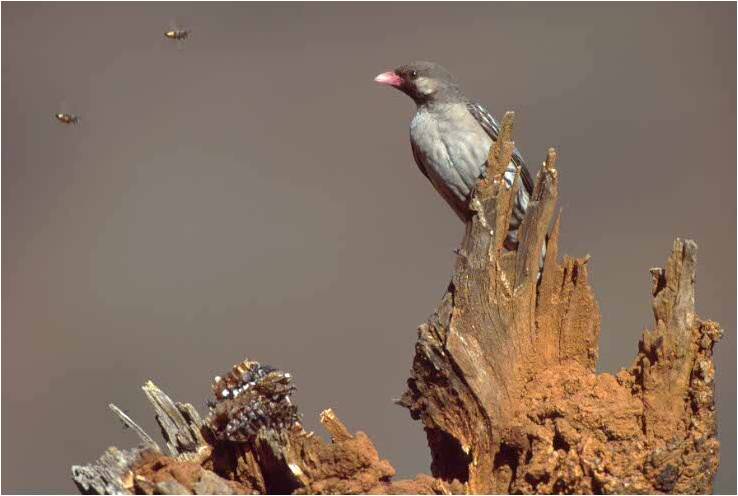
According to rock paintings scattered throughout Africa, humans have been collecting honey for at least 20, 000 years. This is not surprising really seeing as it is a readily available and palatable food that has a sweet taste and high energy output. What is surprising however, is that many African tribes (which still collect honey using traditional techniques), frequently work in partnership with a bird that leads them to any bee colonies that it has discovered in trees, rock crevasses and disused termite mounds! There are anecdotal records of this partnership extending as far back as the 17th Century - a partnership that has been of great interest to many biologists.

The Greater Honeyguide, Indicator indicator, is related to the family of woodpeckers and is native to sub-Saharan Africa.

This remarkable partnership between the Greater Honeyguide and humans is fairly complex and requires the active participation of both parties in order for it to work effectively. To begin it, African honey-gatherers first draw the attention of the bird when they set out on an expedition by using a distinctive whistle that can be heard from more than a 1 km away. This call, known as the 'Fuulido' among the Boran tribes of Kenya, is made by blowing air into closed fists, modified shells or hollow nuts and more than doubles their chances of encountering the bird. Once a Honeyguide has located humans that are interested in foraging for honey, it becomes excited and flits rapidly between perches that are close to the party while emitting a double-noted and persistent call. African honey-gatherers claim that this call signals that the bird knows of a nearby bee colony, which it will lead them to. Thereafter this behaviour, the Honeyguide flies away in a straight line for up to few minutes before returning. Once it has returned to the foraging party it sits on a conspicuous perch until the honey-gatherers approach it, at which point it flies off again in the same direction (while calling). In this manner, it leads the humans to the site of the colony with each flight getting shorter and each perch getting lower as the distance to the hive decreases. Once the Honeyguide has reached the site of the hive, it circles it and emits a lower 'indication call' that is softer, with a greater gap between notes to signal their arrival.

Researchers have found that this communication system is extremely successful and have calculated that by following the bird, African honey-gatherers can reduce their foraging times by 64% (Isack & Reyer, 1989)! Despite its obvious success and benefits to humans however, many scientists were once baffled as to why the system evolved in the first place. Mainly, because it would have been an evolutionary nightmare: with both counterparts to the system having to learn how to communicate with the other and what parts to play simultaneously... It is plausible however when you consider the fact that humans and Honeyguides have coexisted in Africa for millions of years, providing a long 'window' that this could have taken place in. Furthermore, the evolution of such a system makes sense logically. Humans benefit from following the Honeyguide since the bird leads them to bee colonies and saves them many hours that they could have spent fruitlessly searching for. Once at the nests, humans can break them open using tools and smoke (an old bee-keepers trick that makes bees very docile, effectively sending them to sleep) to extract the honey and thus, get a food reward. The Honeyguide benefits from leading humans to any nests that it has found since humans can break the nests much more easily than they can. Thus, they can get their own food reward (wax and larvae) without the risk of being stung. Thus, both parties directly benefit from participating in the arrangement and it should logically, be under positive selection pressure.

Many biologists argue that the communication system between humans and the Honeyguide actually evolved between the bird and the Honey Badger, Mellivora capensis, and that humans merely 'hijacked' their way into it. This is highly doubtful however, due to two main reasons. Firstly, Honeyguides are diurnal (active during the day) and Honey Badgers are nocturnal (active during the night) so the animals would rarely meet under natural circumstances and definitely not enough to allow such a sophisticated communication system to have evolved. Secondly, because no-one has ever seen a Honeyguide lead a Honey Badger to a bee colony nor are there any historical anecdotes of this occurring.

Interspecific communication systems such as this are very rare in nature and have only seldom evolved. This is mainly due to the fact that different species are usually in direct competition with each other for resources so would normally selfishly exploit such a system for their own ends and due to the difficulties in the genetics and learning that underlies such behaviours (which were mentioned earlier). Thus, the relationship between humans and the Greater Honeyguide is a remarkable feat of communicative engineering and is a superb example of the ingenuity of Nature.


Reference

Isack H. A. & Reyer H. U. (1989). Honeyguides and Honey Gathers: Interspecific Communication in a Symbiotic Relationship. Science 243, 1343-1346.

11 July 2012

"I spy with my AMAZING eye..."

Human vision is incredible, with our eye being one of the most sophisticated structures for capturing light that has ever evolved. Our eyes are capable of detecting a single photon of light at night and can create complex and unbelievably definite images during the day, being able to make out structures 1/10th of a hair-span wide. Our eyes allow us to see the world in a detail that almost no other mammal (or animal) can imagine and, since humans rely mostly on our vision to interact with and perceive the world, are extremely important to our survival and quality of life.

Although light is detected by the eye, and is essential for it to function, too much light can be very damaging to our vision. Thus the size of the pupil, the black hole in its centre where light enters, can be controlled by the iris that surrounds it. The iris contains light absorbing pigments and determines how much light can enter the eye. The eye ball itself is protected by being shrunk back into its socket, with our brow protruding over it to reduce the likelihood of it being physically struck. In addition, our eyelids have eyelashes that help to stop dust and debris from falling onto its surface.

The human eye is classified as a 'lens eye', since it forms images using a biological lens that is suspended behind the pupil. Lens eyes are the most complex form of visually perceiving light and have only evolved in primates, birds and some Cephalopods (squid and octopuses), being unique in their ability to alter their focus to produce crisp images of close up objects and those that are much further away. Most organisms have a 'fixed focus' system where any object that is not at a certain and specific distance from their eye will appear blurred. The lens makes this focus possible by bending the light that passes through it so that it is refracted neatly onto the fovea (which is at the centre of the macula), at the back of the eye. The fovea is a small area of the retina where the light receptor cells that make make up the retina are particularly dense, and produces the most detailed image of our surroundings. Thus, by becoming thicker for closer up objects and thinner for those further away, the lens can refract light so that most of it lands on the fovea and a sharp, clear image is formed.

To focus on close up objects the lens is made thicker so that its refractive power is increased. This is accomplished by a contraction of the ciliary bodies so that the tension on the suspensory ligaments is reduced. This means that they pull the lens less taught and it contracts. Likewise, to focus on far away objects the converse is true: the ciliary bodies relax, causing the suspensory ligaments to tighten and the lens is pulled upon, stretching it out. This then decreases the refractory power of the lens and light is bent less.

The mammalian visual system is made up from 2 different types of photoreceptor cell: cones, which are responsible for seeing colour during the day (or in other conditions of high light intensity); and rods, which work in 'black and white' and are responsible for our night vision. These photoreceptors contain 4 different photopigments that split when photons of light hit them, producing an electrical charge. This charge is then magnified into a nerve impulse and is sent to the optic chiasm in the brain (via the optic nerve), where it is collated with other impulses from the eyes and processed to form an image. The type of photopigments present in the photoreceptor depends upon its type. Rod cells only contain rhodopsin, which is made from vitamin A (the reason why carrots, which are high in vitamin A, can improve your night vision). Rhodopsin is very sensitive and can detect a single photon of light, responding best to light at 498nm. Although this isn't enough to form an image, it shows just how sensitive human eyes are and explains why our eyes sting when we go from the dark into the light: the sudden increase in light intensity splits all of the photopigment and prevents it from being reconstructed. This is known as 'bleaching' and takes about 15 minutes to be reversed, which is why it takes your eyes a while to adjust to seeing in the dark. Rod cells show the opposite distribution to cone cells and are less concentrated in the fovea, becoming more abundant towards the edge of the retina. Thus, human night vision is at its best in its periphery and objects often become less clear to us in the dark when we look at them directly! This fact is how many scientists explain those incidences where you seem to see something out of corner of your eye that vanishes when you look to see what is was...

The remaining 3 photopigments then, are involved in colour vision and work together to form the 'pallet' of colours that humans can see. This complimentary system is called a trichromatic system and each photopigment responds best at a different wavelength of light, so that most of the electromagnetic spectrum is covered. Long Wave Sensitive (LWS) opsin responds best to wavelengths of 564nm and sees red light; Medium Wave Sensitive (MWS) opsin responds best to wavelengths of 533nm and sees green light; and Short Wave Sensitive (SWS) opsin responds best to wavelengths of 433nm and sees blue light. The brain mixes the signals coming from the 4.5 million cone cells in the retina of each eye and produces colour. Interestingly, this is the same system that early (tube) colour television sets used to form colour picture! They used thousands of units of 3 triangles placed side-by-side that were coloured red, green and blue respectively.

Many nocturnal predators, such as canids and felids (like the cat in this picture), possess a reflective layer of cells beneath their retina called the tapetum lucidum. These cells reflect light back through the retina so that each photon is detected twice. This greatly improves their night vision and explains why their eyes seem to glow in the dark.

However, despite human vision being one of the best visual systems in the world that allows us to see with a clarity experienced by very few other organisms, it is fundamentally limited. This is believed to be due to a phenomenon called 'nocturnal bottlenecking', which occurred over millions of years during the rein of the dinosaurs. Due to the size and ferocity of the dinosaurs the mammals present in this era remained very small and were only active at night to avoid predation. This meant that many genes for colour photoreception were lost, since they were not needed and were not selected for. Thus, the mammalian colour visual system had to be 'rebuilt' from only the 3 photopigments that we had left when the dinosaurs had died out and we began to display diurnal activity. This unfortunately means that our perception of the electromagnetic spectrum is very limited and, as a result, mammals cannot see infra-red or ultraviolet light (UV) light like many of the organisms in the other classes of animals.

However our evolution on the flat African savannah plains has helped to compensate for this and we have  developed a fantastic visual system, which evolved as our primary sense. Our visual system is far superior in terms of quality to that of most other organisms, even if we cannot perceive as much of the electromagnetic spectrum as them; and personally speaking, I would much rather be able to see in higher quality than in more colours so our bottlenecking may actually have worked out for the best!